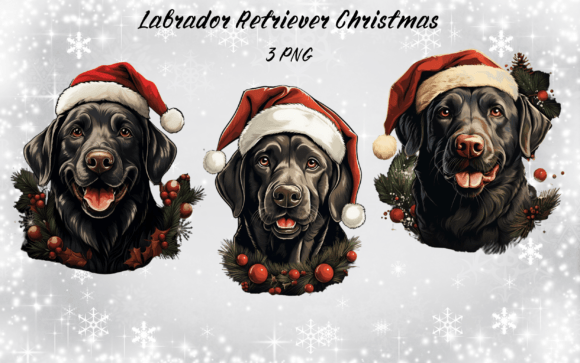
Labrador Retriever Christmas Clipart: A Designer's Review
When I first opened the folder containing Labrador Retriever Christmas Clipart, my immediate reaction was a mix of nostalgia and practical curiosity. As someone who has spent years turning digital files into tangible, stitched goods for clients and craft fairs, I know that the difference between a design that sells and one that gathers dust often comes down to execution. This piece from the Illustrations category isn't just a cute picture; it is a potential centerpiece for a holiday collection, but only if it translates well from the screen to the needle.
The mood this design sets is warm, inviting, and undeniably festive. It captures that specific golden-hour light of a December afternoon, promising a cozy atmosphere that fits perfectly with the season. For an embroidery designer, the visual personality is key. Does it feel too busy? Is the composition balanced enough for a chest pocket or a centered tote bag? The initial assessment suggests a layout that respects negative space, allowing the Labrador to breathe while still delivering that holiday charm. It feels like a design meant for connection, perfect for a customer looking for a personalized gift that speaks to their love for dogs and the holidays simultaneously.
From Screen to Stitch: Real-World Application
I recently put this embroidery file through a rigorous test scenario to see how it holds up in a real production environment. My goal was to create a custom embroidered tote bag for a local boutique client who specializes in pet-friendly holiday gifts. The brief was simple: something high-quality, durable, and visually striking that would stand out on a shelf next to generic store-bought items.
The Labrador Retriever Christmas Clipart performed admirably during the digitizing phase. The lines were clean, which made converting the vector art into machine instructions straightforward. When I ran the test on a heavy cotton canvas tote, the stitch density felt substantial without being stiff. The design didn't pucker the fabric, a common issue when working with large fill areas on textured materials. The result was a finished product that looked professional and polished, exactly what a small business owner needs to justify a higher price point.
However, not every project is a tote bag. I also considered how this design would translate to other popular items. Imagine a sweatshirt embroidery project for a family matching set. The softness of the knit fabric requires a slightly different approach than canvas. In this case, the machine embroidery design needs to be balanced so that the weight of the thread doesn't distort the garment. The Labrador's features, particularly the eyes and the texture of the fur, need to be rendered clearly. If the detail is too fine, it might get lost in the thick yarn of a winter sweater. Conversely, if the details are too bold, they might look cartoonish rather than elegant. This clipart strikes a good middle ground, offering enough character to be recognizable even at a distance.
Beyond apparel, I envision this as a fantastic addition to nursery decor or baby clothes. A onesie or a blanket featuring this holiday embroidery concept would be a hit for new parents. The gentle expression of the dog adds a layer of comfort and safety to the aesthetic. For an Etsy seller, this is gold. It offers a unique angle that separates them from sellers pushing generic snowflakes and reindeer. A personalized gift with a specific breed like a Labrador appeals directly to a niche audience willing to pay for customization.
Navigating Challenges and Limitations
While the design has strong potential, a responsible designer must also identify where it might struggle. Not every surface is suitable for every pattern. If you are planning to use this on a curved surface like a baseball cap, you will need to be very careful with the hoop size and the curvature of the placement area. Caps require designs that can wrap around the front panel without distorting the image. If the stitch density is too high, the fabric might bunch up, ruining the shape of the hat.
Texture is another critical factor. Embroidering on a highly textured fabric, such as a bouclé wool or a rough linen, can obscure the finer details of the Labrador's face. The thread might not lay flat, leading to a muddied appearance. Similarly, thin fabrics like silk or lightweight rayon are risky unless backed with a heavy-duty stabilizer. Without proper support, the tension of the stitches could tear the material or cause the design to pull away from the fabric over time.
Dark fabrics present their own set of challenges. While dark backgrounds can make colors pop, they also require a solid underlay to ensure the top threads show up clearly. If the thread colors chosen for the Labrador don't have enough contrast against the shirt, the design will disappear. I recommend testing a black-and-white mockup before committing to the final run. This helps visualize the value of the design independent of color, ensuring the shapes are distinct and readable.
There are also specific areas where caution is advised. Tiny lettering or intricate decorative accents within the design might not survive frequent washing, especially on items like kitchen towels or aprons that go through the dishwasher or washing machine daily. If you are creating a commercial product intended for long-term use, you must prioritize durability over sheer intricacy. Dense stitch areas should be reviewed to ensure they aren't too thick, which can lead to thread breakage or needle deflection during the stitching process.
Design Notes for the Professional Maker
Before you upload this to your machine or start selling finished products, there are several technical steps you must take to ensure success. First and foremost, always test the design on scrap fabric. This is non-negotiable. You need to see how the stabilizer interacts with your specific fabric choice and whether the tension settings on your machine need adjustment. A design that looks perfect on a computer screen can fail miserably on a vintage sewing machine if the parameters aren't right.
Check the stitch density carefully. High-density fills can create a hard, board-like feel, which is undesirable for baby clothes or soft home goods. If the design feels too stiff after stitching, consider adjusting the digitization to reduce the number of layers or switching to a combination of satin stitch and running stitch for better drape. Inspect the small details, particularly the eyes and nose of the Labrador, to ensure they are defined enough to convey emotion but not so complex that they become indistinguishable blobs.
For those of you running a craft business or selling on platforms like Etsy, licensing is paramount. Confirm whether this digital embroidery file allows for commercial use. Many designers sell personal-use licenses only, meaning you cannot sell the finished embroidered items without purchasing a separate commercial license. Ignoring this can lead to legal trouble and damage your reputation as a trustworthy small shop product creator.
Finally, think about the presentation. How will this embroidered patch or tote bag design look in your online listings? Creating a printable mockup that shows the design on various backgrounds can help customers visualize the final product. Compare light and dark fabric backgrounds to ensure the design remains versatile. By paying attention to these details, you elevate the perceived value of your work and build trust with your buyers.
In conclusion, the Labrador Retriever Christmas Clipart is a versatile asset for any creative entrepreneur. It balances charm with structural integrity, making it suitable for a wide range of projects from custom apparel to decorative accents. However, its success depends entirely on the skill of the operator and the care taken during the preparation phase. Treat it with respect, test it thoroughly, and you will likely find yourself with a best-selling item that brings joy to dog lovers everywhere.